

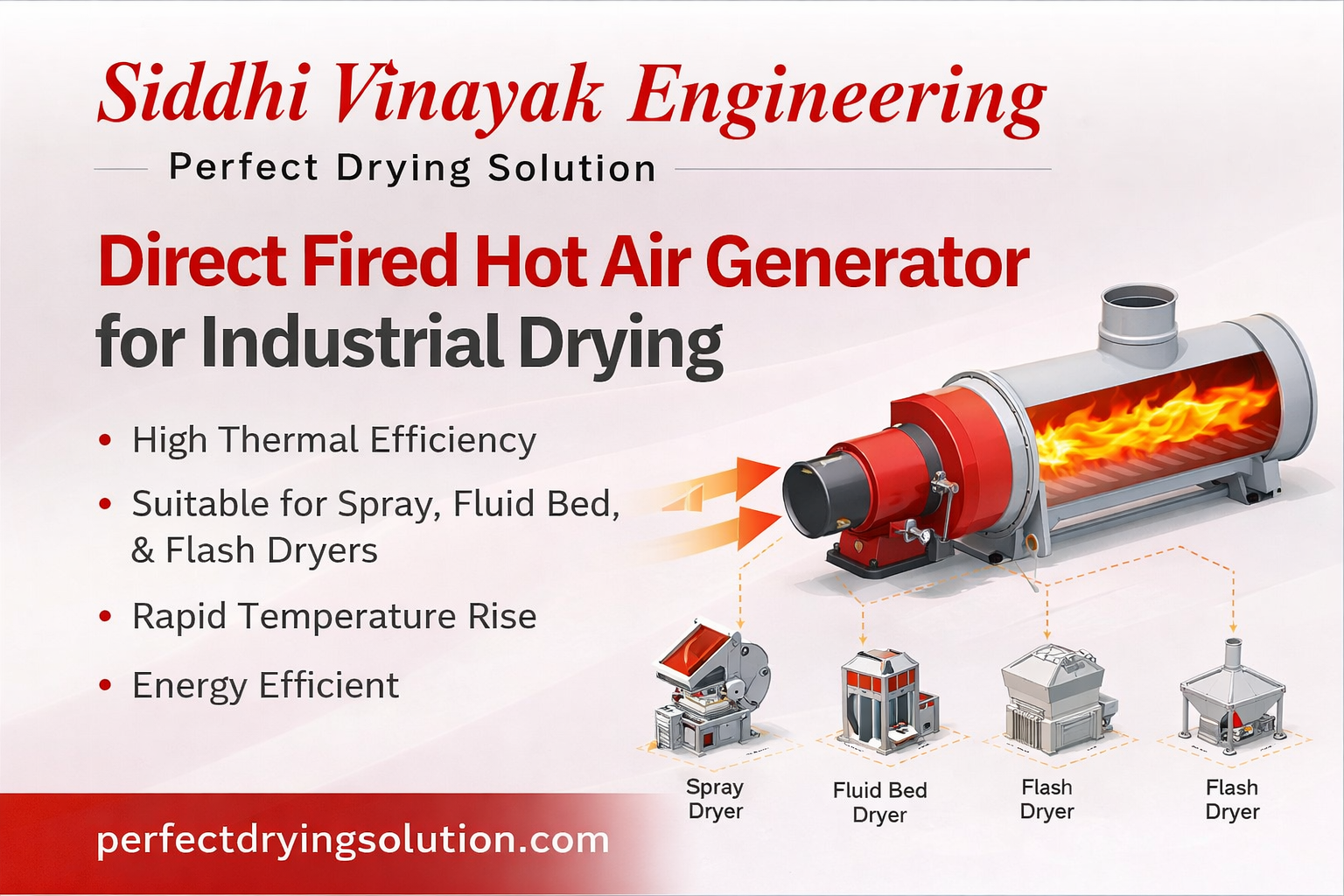
Direct Fired Hot Air Generator for Industrial Drying
Direct Fired Hot Air Generator for Industrial Drying
In industrial environments where consistent and efficient heating is essential, a direct fired hot air generator for industrial drying plays a vital role in maintaining process efficiency. These systems are widely used across industries where rapid heating and controlled airflow are required to remove moisture from materials. Unlike conventional heating methods, direct fired systems transfer heat directly through combustion gases, resulting in faster and more efficient drying performance.
Industrial drying processes require reliability and uniform temperature distribution to maintain product quality. A direct fired hot air generator supports these requirements by delivering continuous hot air with minimal heat loss, making it suitable for large-scale and high-capacity operations.
Understanding Direct Fired Hot Air Generator Technology
A direct fired hot air generator operates on a simple principle where fuel combustion takes place within a chamber, and the resulting hot gases are directly mixed with the air stream. This direct interaction enables immediate heat transfer and eliminates the need for complex heat exchange systems.
The combustion process generates high-temperature gases that pass through the airflow system, heating the air instantly. This design allows faster heating cycles while improving energy efficiency compared to indirect systems. The straightforward construction also supports easier maintenance and stable operation.
Key Components of Direct Fired Hot Air Generators
A direct fired hot air generator consists of several essential components that work together to produce and distribute hot air efficiently.
The combustion chamber is where fuel is burned to generate heat. It is designed to handle high temperatures while ensuring complete combustion. The burner system manages ignition and fuel supply, maintaining a stable and controlled flame.
The air circulation system, typically supported by high-capacity blowers, moves air through the combustion zone, allowing it to absorb heat directly. Temperature control systems regulate the output based on process requirements, ensuring consistent and reliable performance.
Working Principle of Direct Fired Heating System
The working mechanism of a direct fired hot air generator is based on direct heat exchange between combustion gases and process air. Fuel is introduced into the combustion chamber and ignited by the burner. As combustion occurs, hot gases are generated and mixed with incoming air.
This heated air is then circulated through ducts or directly into the drying chamber. Since there is no intermediate heat transfer surface, the system achieves high thermal efficiency. Continuous airflow ensures uniform temperature distribution across the drying area, which is essential for maintaining consistent product quality.
Advantages of Direct Fired Hot Air Generator
- High thermal efficiency due to direct heat transfer between combustion gases and air
- Rapid temperature rise, enabling faster drying cycles and improved productivity
- Compact and simple design, reducing installation space requirements
- Lower operational complexity compared to indirect heating systems
- Suitable for continuous industrial processes requiring stable heat supply
Applications of Direct Fired Hot Air Generator in Industrial Drying
Direct fired hot air generators are widely used in industries where moisture removal and heat treatment are essential parts of the process.
- Drying of powders, granules, and bulk materials in processing industries
- Heating applications in textile, paper, and food processing sectors
- Curing operations in coatings, chemicals, and manufacturing processes
- Space heating in large industrial environments
- Integration with dryers such as spray dryers, flash dryers, and fluid bed dryers
Role in Industrial Drying Systems
Industrial drying systems depend on controlled temperature and airflow for effective moisture removal. A direct fired hot air generator integrates efficiently with various types of dryers, providing a continuous and reliable heat source.
In spray drying, the generator supplies hot air required to convert liquid feed into powder form. In flash drying and fluid bed drying systems, it supports rapid drying by maintaining uniform airflow and temperature. This adaptability makes it a preferred choice for industries requiring flexible and scalable drying solutions.
Efficiency and Performance Considerations
The efficiency of a direct fired hot air generator depends on proper fuel combustion, airflow management, and overall system design. High-quality burners and optimized air-fuel ratios ensure complete combustion, minimizing energy loss and emissions.
Effective insulation and well-planned system design help retain heat within the system, improving overall efficiency. Advanced control systems also allow operators to monitor and adjust temperature settings, ensuring consistent performance under varying operating conditions.
Industries Benefiting from Direct Fired Hot Air Generators
A wide range of industries rely on direct fired heating systems to maintain process efficiency and product consistency. Sectors such as chemicals, pharmaceuticals, food processing, textiles, and engineering use these systems for drying and heating applications.
In the chemical industry, these generators are used for drying raw materials and intermediates. In food processing, they support dehydration and thermal treatment processes. Textile and paper industries use them for efficient drying of fabrics and materials, ensuring uniform results.
Selecting the Right Direct Fired Hot Air Generator
Selecting the right system depends on several operational factors. Understanding process requirements, temperature range, and airflow capacity is essential for choosing an appropriate generator.
- Evaluate the required temperature range and drying capacity
- Consider fuel compatibility such as gas or liquid fuels
- Assess airflow requirements based on process scale
- Review system design for ease of maintenance and operation
- Ensure compatibility with existing drying equipment
A properly selected system ensures optimal performance, reduced energy consumption, and long-term operational reliability.
Maintenance and Operational Reliability
Regular maintenance is important to ensure efficient functioning of direct fired hot air generators. Cleaning the combustion chamber, inspecting burners, and checking airflow systems help maintain consistent performance.
Monitoring fuel supply and temperature control systems prevents operational issues and ensures safe operation. Routine inspections and preventive maintenance schedules also extend equipment lifespan and reduce downtime in industrial processes.
Future Relevance in Industrial Heating
With the growing demand for energy-efficient industrial solutions, direct fired hot air generators continue to remain relevant in modern manufacturing environments. Their ability to deliver high heat output with a simple design makes them suitable for industries focused on improving productivity and operational efficiency.
Advancements in burner technology and control systems are further enhancing performance, making these systems adaptable to evolving industrial requirements.
Conclusion
A direct fired hot air generator for industrial drying is a reliable and efficient solution for industries that require consistent heating and rapid moisture removal. Its direct heat transfer mechanism, combined with a simple design and high efficiency, makes it suitable for a wide range of industrial applications. By supporting various drying systems and delivering stable performance, it plays an important role in maintaining process efficiency and product quality.