

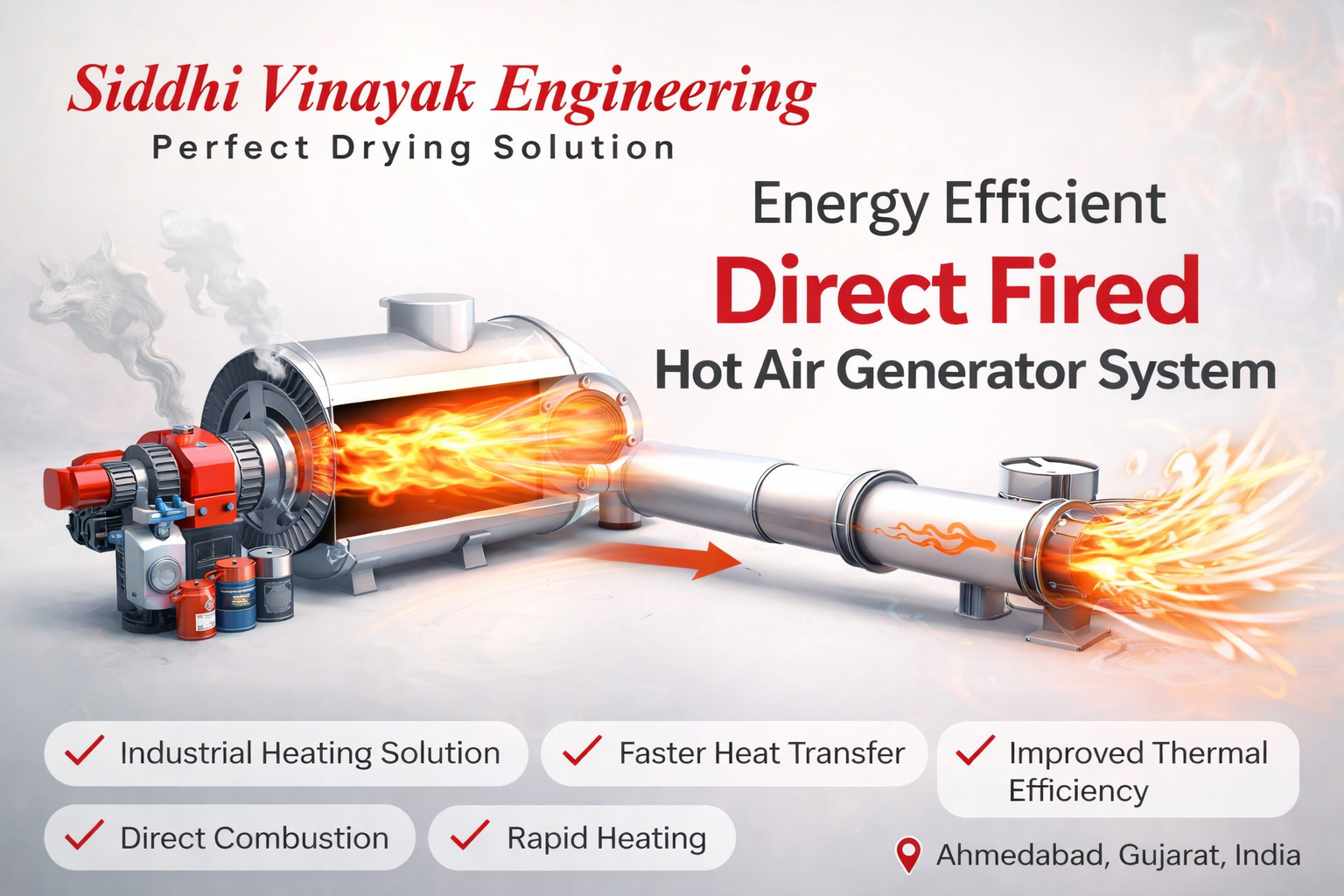
Energy Efficient Direct Fired Hot Air Generator System
Energy Efficient
Direct Fired
Hot Air Generator System
In modern industrial operations, maintaining consistent and efficient heating is essential for productivity and process quality. An energy efficient direct fired hot air generator system is widely used across industries where rapid heating, uniform air distribution, and reliable performance are required. These systems generate hot air by directly mixing combustion gases with process air, enabling faster heat transfer and minimizing energy loss.
Industries that rely on drying, curing, and heating processes require systems capable of delivering stable temperature control while optimizing fuel consumption. Direct fired systems are designed to meet these demands by offering high thermal efficiency and a quick operational response. Their ability to provide instant heating makes them well-suited for dynamic industrial environments where process conditions frequently change.
Understanding the Working Principle of Direct Fired Hot Air Generators
A direct fired hot air generator operates on a simple yet highly efficient mechanism. The system burns fuel within a combustion chamber, and the resulting hot gases are directly introduced into the airflow. Unlike indirect systems, there is no separation between combustion gases and process air, allowing immediate heat transfer.
The system functions through controlled combustion and efficient air circulation. A burner initiates the combustion process, generating high-temperature gases that are then mixed with ambient air using a blower or fan. The heated air is distributed across the required process area, maintaining consistent temperature levels throughout.
The absence of intermediate heat exchange surfaces significantly reduces thermal losses and enhances overall efficiency. This direct interaction between combustion gases and air ensures maximum energy utilization, making the system suitable for energy-conscious industrial applications.
Key Components of an Energy Efficient Direct Fired Hot Air Generator System
The performance and reliability of a direct fired system depend on its core components, each designed to support safe and efficient operation. The combustion chamber serves as the central unit where fuel combustion occurs, engineered to withstand high temperatures while maintaining controlled conditions.
The burner plays a critical role in initiating and sustaining combustion. It regulates the fuel-air mixture to achieve optimal efficiency and stable performance across varying load conditions. Modern burners are equipped with precise control mechanisms to ensure consistent operation.
An air circulation system, typically comprising industrial-grade blowers or fans, ensures uniform distribution of heated air. This helps maintain consistent temperature throughout the process area while reducing hotspots and uneven heating.
Temperature control systems are integrated to monitor and regulate output conditions. These systems adjust fuel input and airflow in real time to maintain the desired temperature, ensuring process stability and operational safety.
Fuel Options and Energy Efficiency Considerations
An energy efficient direct fired hot air generator system can operate on multiple fuel types, including natural gas, propane, diesel, and other industrial fuels. The choice of fuel depends on availability, cost factors, and specific process requirements.
Energy efficiency is primarily achieved through direct heat transfer and optimized combustion. Since there is no heat exchanger separating combustion gases from process air, the system minimizes energy loss and achieves higher thermal efficiency compared to indirect alternatives.
Efficient burner tuning, proper airflow management, and effective insulation further enhance performance. When designed and operated correctly, these systems deliver high output while maintaining controlled fuel consumption, making them a practical solution for industries focused on reducing energy usage.
Industrial Applications of Direct Fired Hot Air Generator Systems
Energy efficient direct fired hot air generator systems are widely used across multiple industries due to their versatility and performance. Their ability to provide rapid heating and consistent airflow makes them suitable for a range of industrial processes.
These systems are particularly valuable in processes where immediate heat availability is essential and where maintaining precise temperature control directly impacts product quality.
- Drying processes in industries such as food processing, textiles, and chemicals
- Heating requirements in manufacturing units and industrial facilities
- Curing operations for coatings, paints, and materials
- Preheating applications in process industries
- Agricultural drying systems for grains and related products
Advantages of Energy Efficient Direct Fired Systems
The adoption of direct fired hot air generator systems offers several operational benefits aligned with modern industrial requirements. Their design emphasizes efficiency, simplicity, and reliability.
These advantages make the system suitable for operations that require continuous, controlled heating with optimized energy utilization.
- High heat transfer efficiency due to direct contact between combustion gases and air
- Fast temperature response for dynamic industrial processes
- Compact design that reduces installation space requirements
- Lower energy loss compared to indirect heating systems
- Versatile applicability across various industries and processes
Selection Factors for Industrial Use
Selecting the right energy efficient direct fired hot air generator system requires careful evaluation of process needs. Industries must consider several technical and operational parameters to ensure optimal performance.
Proper selection ensures that the system aligns with operational demands, improving efficiency and long-term reliability.
- Required temperature range and heat output capacity
- Type of fuel available and system compatibility
- Airflow requirements based on specific applications
- Process environment and safety considerations
- Accuracy and responsiveness of the control system
Maintenance and Operational Considerations
Regular maintenance is essential to ensure consistent performance and safe operation of an energy efficient direct fired hot air generator system. Routine inspection of the combustion chamber, burner, and airflow components helps prevent operational issues and maintain stable output.
Maintenance activities include checking fuel lines, monitoring burner performance, and ensuring proper functioning of air circulation systems. Temperature control systems should be calibrated periodically to maintain accuracy and reliability.
Consistent maintenance not only extends equipment lifespan but also ensures efficient operation, reducing unnecessary energy consumption and minimizing downtime.
Role in Modern Industrial Heating Systems
As industries increasingly focus on energy efficiency and process optimization, direct fired hot air generator systems play an important role in modern heating solutions. Their ability to deliver high thermal efficiency and rapid heating makes them suitable for both conventional and advanced industrial applications.
With growing emphasis on energy conservation, these systems provide an effective solution by minimizing heat loss while maximizing output. Their adaptability across industries further enhances their relevance in today's industrial landscape.
Advancements in burner technology and control systems have significantly improved their performance, making them more reliable and efficient compared to earlier designs.
FAQs
Conclusion
An energy efficient direct fired hot air generator system is a reliable and efficient solution for industrial heating applications. Its ability to provide rapid heating, maintain consistent temperature, and optimize energy usage makes it suitable for a wide range of industries.
With a straightforward design and efficient operation, these systems support modern industrial processes by improving productivity and reducing energy loss. Proper selection, operation, and maintenance ensure long-term performance and consistent output, making them a valuable component of industrial heating systems.